

RECIPE: Zero-Waste Carrot Top Sauerkraut
- Ania
- Aug 14, 2025
- 3 min read

After chatting to a fruit and veg trader at a market it became clear that he had a constant abundance of carrot tops and it got me wondering if we'd be able to make a use for them. The frilly green tops carry the sweet carrot flavour and are perfectly safe to eat, so I just had to accept the challenge of reducing this commonly wasted cast-off!
It was when enjoying a delicious traditional soup favourite (carrot and coriander, of course), that I thought why not create a carrot and coriander inspired sauerkraut. I then got busy and enjoyed making a few different versions of the sauerkraut, chopping the carrot tops with carrot root, cabbage and fresh coriander and then varying different additional ingredients.
I made four different tester batches, some with spring onion and some without. One with garlic and ginger, one with cumin, one with black pepper and one with both fresh and ground coriander. It was great fun making my own batches at home, after producing in the kitchen I had forgotten the difference of doing it myself rather than with the big machinery. It was a good workout!
The white cabbage, orange carrot, coriander and carrot tops created a lovely mix of colours. I was debating whether to add paprika but I'm glad I didn't as it would've changed the lovely green colour into a brown. The batches with spring onion had even more of a green appearance, this may be useful to anyone looking for a bright green coloured ferment.
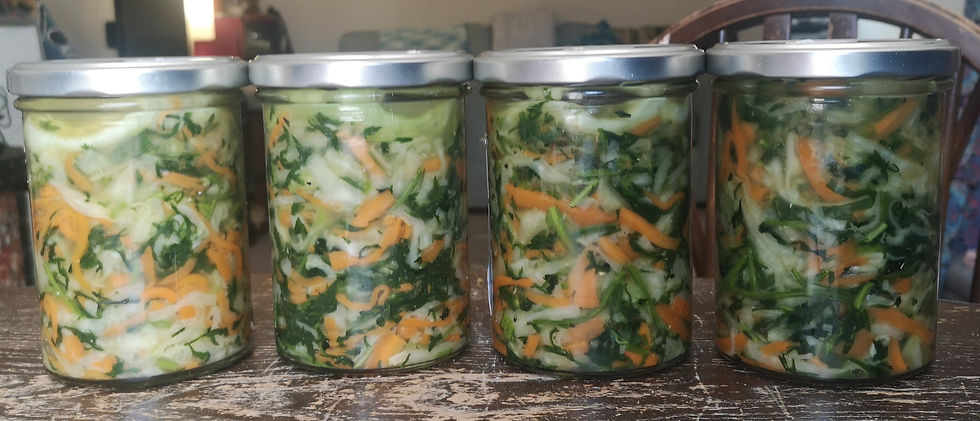
After roughly 2 weeks they were ready to taste. It was the moment of truth, unfortunately my addition of black pepper did not go down well. However its true what they say sometimes, less is more. A simple carrot top and cabbage sauerkraut with just the addition of dried coriander came out as the best; super fresh, light and ever so slightly sweet.
So make your own using our simple recipe below. I've purposefully chosen a jar that will leave a gap above my sauerkraut but not too much of a gap. This is because as fermentation occurs and the live bacteria are produced the sauerkraut may fizz and expand (perfectly normal). If I fill the jars too full they are likely to leak, again this is normal and I advise placing your ferments on a tray or plate just in case, but the right jar size can reduce this problem. Equally, it's important not to have a huge air gap as the reduction of air will ensure that fermentation occurs and the correct bacteria's are produced. See our blog with top tips for kraut or our workshops for more useful info.
Ingredients (Makes approx 350g to fill a 430g jar)
120g (1/4 of a medium) white cabbage (saving an outer cabbage leaf)
100g (2 medium) carrots
80g (finely chopped) carrot tops
20g (approx 2) spring onions
7g (2% of vegetable weight) salt
1/4 tsp dried coriander
Method:
Finely chop your white cabbage into thin strips and place into a mixing bowl. Sprinkle over half of the salt and lightly mix into cabbage.
Grate the carrot, finely shred the spring onion and finely chop the carrot tops before adding them to the cabbage, along with the rest of the salt. Finally, add the dried coriander (optional).
Now time for the muscle, massage the veg working out the moisture and creating your brine. Feel free to leave your veg to soften in the salt and take breaks if needed.
Once enough brine has been produced to submerge your veg (take a handful and squeeze, if liquid pours out you're ready!) then you can pack it into a jar to ferment. Push a small handful of veg down into the jar at a time, removing any air pockets in the jars and fully submerging it under the brine. Finally take your spare cabbage leaf and place it on top, again pushing it down under the brine. This acts as an air barrier and can be discarded after the fermentation process has occurred.
Place the jar out of direct sun but somewhere you'll remember it at between 15-23°C for 1-3 weeks. Remember to burp your jar about once a day, opening the lid letting the air out and then tightening it back up again. Your ferment may fizz as the days go on, simply wipe your jar and place the lid back on. Try frequently as it ferments. Once you are happy with the texture and taste of your kraut keep in the fridge and consume within the next couple of months.


