- Drinks, fermentation, foodie, Gut friendly, Kombucha, Living food, probiotic
- My Store Admin
Is the kombucha you're drinking 'real kombucha'?
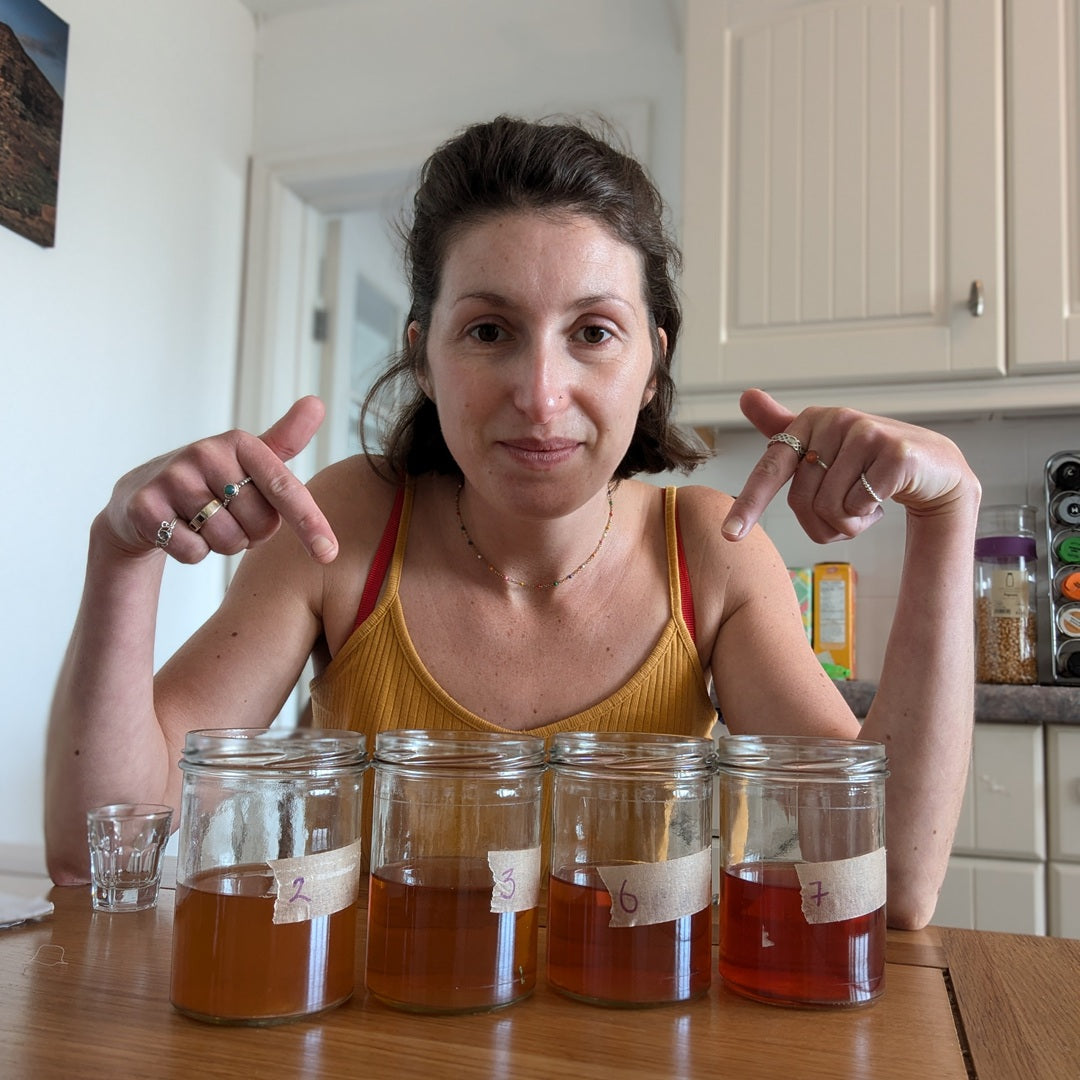
Our Big Kombucha Experiment 🧪
We’ve been teaching kombucha workshops for years, and one thing we always tell people is this:
“If anything happens to your SCOBY, don’t panic - you can always start a new one from a good quality, shop-bought kombucha!”
But then one day we looked at each other and realised… Have we ever actually tested that?
Nope. Not once.
So, in the name of science (and because it sounded fun), we finally did it. We bought eight different kombuchas in the UK - a mix of supermarket own-brands, small artisanal brewers, and the big mainstream “booch” names you see everywhere. Then we launched what we now lovingly call: The Big Kombucha Experiment
Before we dive in, here’s what we mean when we say real kombucha:
Real kombucha should be alive. It should have enough acidity, yeast, and bacteria that you can use a bottle of ready-to-drink booch as a starter to brew your own. That’s how kombucha is traditionally made.
So we set out to see:
Can shop-bought kombucha actually brew a new batch - or are a lot of these products just fizzy, slightly sour drinks wearing a kombucha costume?
We made a big batch of sweet tea, poured some into eight jars, and added a different brand of shop-bought kombucha to each one. Same tea. Same conditions. Same containers.
Below are the brands we used:
Cotswold Kombucha
Blighty Booch
M&S Own-brand Kombucha
Hip Pop Kombucha
Remedy Kombucha
Lo Bros Kombucha
Counter Culture Kombucha
Biona Kombucha
Then we WAITED (Kombucha brewers will know this is the hardest part).
After a while, we checked in on all the jars… and wow. The differences were dramatic.
Two jars already had coloured mould on top.
This is something you never want to see in a healthy kombucha ferment. A good starter should be acidic enough to protect itself from mould.
And guess what both these mouldy jars were?
Shelf-stable, big brand kombuchas.
We won’t name names (you can probably guess), but we were not surprised. If a kombucha sits happily on a warm, bright supermarket shelf for months, it’s likely been produced using industrial shortcuts or alternative methods that don’t rely on a live culture.
So those two were out - straight to the bin.
But two of the jars looked fantastic.
They had visible rafts/baby SCOBYs forming, which is exactly what you’d expect from a living, traditionally brewed kombucha.
Both of these came from small, artisanal UK kombucha brewers.
So far, our hypothesis was spot-on.
Phase 3 - What About the Middle Ground?
That left four jars:
- No visible mould
- No SCOBY formation
- Just… sitting there doing nothing
To give them a fair shot, we did what we’d normally do in a workshop. We brewed fresh sweet tea and used each kombucha as a 10% starter in a proper batch.
Then we let them ferment for a couple weeks.
Surely one of these would show signs of life… right?
Phase 4 - The Final Results (and the Grand Letdown)
When we checked them again…
Every single one of those four remaining brands had gone badly mouldy.
One was a supermarket own brand. One was a big low-calorie booch brand. The other two were mainstream names you absolutely know.
All four failed.
So, out of eight kombuchas tested:
Only TWO successfully brewed a new kombucha.
And both were small-batch, artisanal kombuchas made using traditional fermentation. Actually let's shout them out: Cotswold Kombucha & Blighty Booch deserve the recognition for doing things the hard, but traditional way.
Everything else - the shelf-stable brands, the “low cal” booches, the supermarket versions, the big corporate names - simply weren’t alive enough to recreate a proper kombucha ferment.
Which really makes us wonder…
Are some of these companies even making kombucha? Or are they producing something else entirely - a fizzy, slightly tart drink with a few microbes added in?
So… Is the Kombucha You’re Buying ‘Real’?
If you want a kombucha that’s alive, fermenting, and capable of growing a SCOBY:
Buy from a small, artisanal brewer. These were the only ones in our experiment that behaved like real kombucha.
If your SCOBY ever dies and you need a new starter, now you know exactly where to look (or see below).
And if you’ve ever wondered why some kombuchas taste wildly different from others - well, this experiment kind of answers that too.
Home fermenters: We did the work for you. Long live real booch. 🫧💛
And to learn more about our Kombucha Workshops head to our workshop page or check out our Kombucha Starter Kit.


