

- easy, fermentation, Fermented food, Food, foodie, Gut friendly, Living food, Recipe, Sustainability, Zero waste
- My Store Admin
Fermented Watermelon Rind
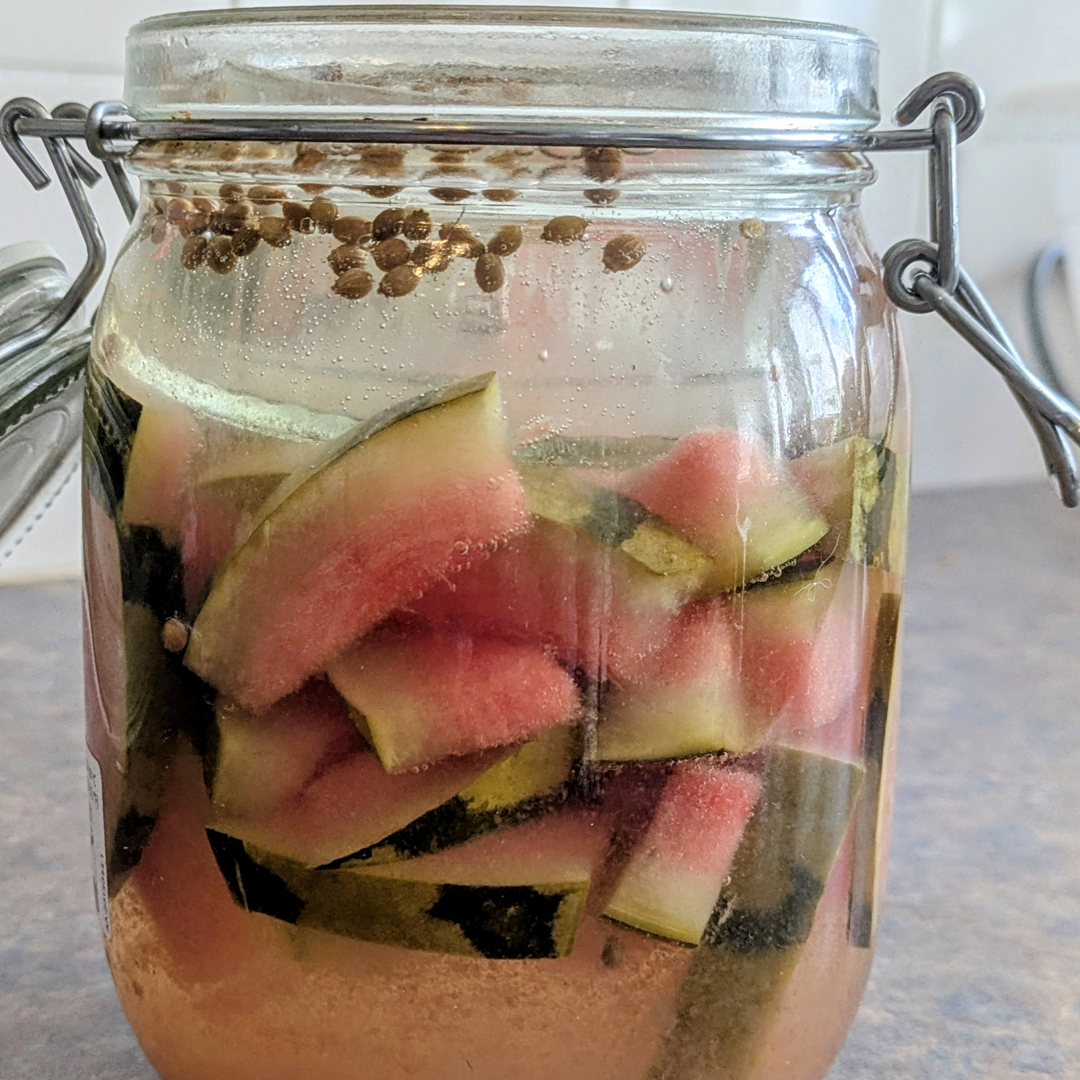
Watermelon is one of those foods that just screams summer. It's cold, juicy, sweet and incredibly refreshing on a hot day - which is probably why we've gotten through so much of it this summer 🥵
We have two wee watermelon fiends living with us, so come summer there's usually a steady supply of watermelon being demolished. The only downside? A whole lot of rind heading for the compost bin.
Now, we're very much fans of the compost bin, but we're even bigger fans of finding ways to actually eat the bits that would otherwise get thrown away. And watermelon rind is surprisingly good when you ferment it.
So, rather than letting all that lovely rind go to waste, we started fermenting it. This is actually a common, traditional practice in watermelon growing regions such as the Southern United States.
Why ferment watermelon rind?
The rind is firm and crunchy, which makes it a great candidate for fermentation. Once it's sat in a simple salt brine for a few days, it softens slightly while keeping plenty of that lovely crunch, and develops a delicious tangy, salty flavour. Similar to your usual cucumber pickle and it can be used in the same way.
It's also a really simple way of getting a bit more life out of something you'd normally chuck away.
This is very much in keeping with what we're trying to do at The Crafty Pickle Co. We love fermentation because it can be a brilliant way of preserving food, but we also love the opportunity it gives us to look at ingredients a little differently.
Ingredients
Watermelon rind
Water
Salt (we use fine sea salt)
For this recipe we're using a 2% salt brine. That means you'll need 20g of salt for every 1kg of watermelon rind and water combined. You don't need to make a huge batch though. Just save the rind from the watermelon you've eaten, find a suitable jar and make enough brine to cover it.
Method
1. Eat the watermelon! Start by enjoying your watermelon as normal. You can either ferment the rind with the outer green skin on (to make use of natural yeasts) or use a sharp knife to trim it away. Cut the rind into bite-sized pieces or strips. If leaving the rind on you won't want to eat this once it's fermented so can remove upon eating.
2. Place your empty jar on a set of scales and tare it so the display reads zero. Add the watermelon rind, packing it down tightly as you go.
3. With the jar still on the scales, pour in enough water to completely cover the rind, leaving a couple of centimetres of space at the top of the jar. Take note of the weight on the scales. This is the combined weight of your watermelon rind and water.
4. Calculate your salt. For a 2% brine, multiply the weight on the scales by 0.02. For example, if your watermelon rind and water weigh 500g in total: 500g × 0.02 = 10g salt. So you'd need 10g of salt.
5. Take the jar off the scales and carefully pour the water back out into a jug or bowl, keeping the watermelon rind in the jar. Add your calculated amount of salt to the water and stir until it's completely dissolved. Pour the brine back over the watermelon rind.
6. Keep everything under the brine. Use a clean spoon to push the watermelon rind underneath the surface of the brine and release any trapped air bubbles.
It's important that the rind stays submerged during fermentation. If you've got a fermentation weight, this is a great time to use it. We usually use a glass shot glass or ramekin to weigh everything down. Wipe the rim of the jar clean and put the lid on.
7. Let it ferment. Leave your jar somewhere at room temperature and out of direct sunlight. Start tasting after a day or whenever bubbles start to form. You'll notice the flavour becoming more sour and tangy as fermentation progresses. We like ours after around 2-3 days, but the exact timing will depend on the temperature in your kitchen and how tangy you like it. Once you're happy with the flavour, pop the jar in the fridge to slow the fermentation down and enjoy.


